
Water Conservation Through Sustainable Ablution (Wudu)
A practical, scalable water-conservation initiative focused on reducing unnecessary water consumption during ablution in mosques and community facilities.
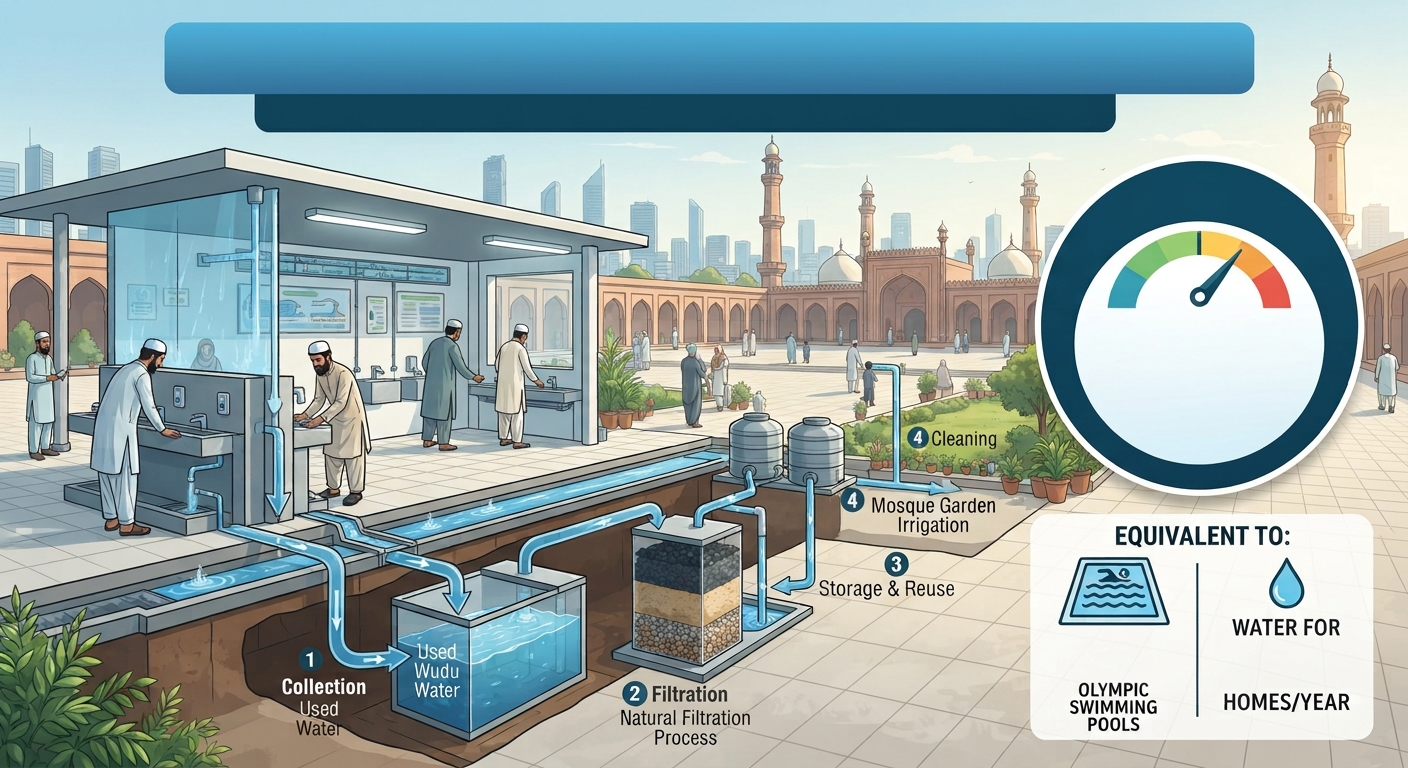
Executive Summary
Water is one of our most precious natural resources. In Pakistan, increasing water scarcity makes conservation an urgent environmental and social priority.
Every day, millions of Muslims perform ablution (wudu) before offering prayers. Although ablution is an essential religious practice, unnecessary water flow during washing can result in substantial water wastage when repeated across large numbers of worshippers.
HFT Pakistan proposes to promote a practical and scalable water-conservation initiative focused on reducing unnecessary water consumption during ablution in mosques and community facilities. The initiative will combine water-efficient equipment where appropriate, public awareness, mosque partnerships, water-use assessments and impact monitoring.
Our mission is to save millions of litres of water, protect our environment and inspire communities to become responsible water stewards.
Background and Need
Pakistan faces increasing pressure on its freshwater resources due to population growth, urbanization, changing rainfall patterns and rising water demand. Water conservation requires action not only in agriculture and industry but also in homes, mosques, schools, offices and public buildings.
Mosques offer a valuable opportunity to promote water awareness because they bring communities together regularly. Small reductions in water use per person can create significant cumulative savings when adopted by many worshippers.
Project Objectives
- Reduce unnecessary water consumption during ablution.
- Promote responsible water use while preserving proper ablution practices.
- Introduce suitable water-efficient taps and flow-control solutions where feasible.
- Educate mosque committees, imams, students and worshippers about water conservation.
- Measure and document water savings through reliable monitoring.
- Develop partnerships with government departments, businesses, donors and environmental organizations.
- Create a replicable model that can be expanded across Pakistan and other countries.
Main Project Components
Water-Saving Ablution Facilities
Assess existing ablution areas and identify opportunities to reduce water consumption. Depending on local conditions, interventions may include low-flow taps, flow restrictors, push-button taps, leak repairs and other suitable water-saving devices. Equipment must provide adequate flow, remain hygienic and be appropriate for the site’s plumbing and users.
Awareness Campaign
Develop educational materials in Urdu and regional languages, including posters, banners, social media content and short awareness videos. Key message: “Perform Wudu with care. Save water. Protect life.”
Mosque Partnerships
Invite mosque committees and religious leaders to participate voluntarily. Provide practical guidance on reducing unnecessary running water and maintaining efficient facilities.
Water Audits and Measurement
Record water consumption at participating sites before and after interventions wherever reliable measurement is possible. Use water meters, documented flow-rate tests, tap-use observations and operating records to calculate savings.
Community and Youth Engagement
Involve students, volunteers, community groups and environmental organizations in awareness activities and periodic reporting.
Digital Impact Reporting
Maintain a record of participating mosques, intervention dates, equipment installed, monitoring periods, water savings and maintenance requirements.
How Water Savings Will Be Calculated
Water savings must be based on measurements or clearly stated assumptions. For example:
- Water saved per day = reduction in average water use per ablution × number of ablutions per day.
- Estimated annual savings = daily water savings × operating days per year.
Illustrative example only. If an intervention saves an average of 1 litre per ablution, and a mosque records 500 ablutions per day, the estimated saving is 500 litres daily, or 182,500 litres over 365 days. Actual savings will vary by site and must be verified. Results from individual mosques should not be extrapolated to the entire country without supporting evidence.
Implementation Plan
Phase 1 — Documentation and Assessment
- Compile records of previous HFT Pakistan water-conservation activities.
- Identify participating mosques and community facilities.
- Assess existing taps, water consumption and conservation opportunities.
- Establish baseline measurements and a monitoring system.
Phase 2 — Pilot Programme
- Select suitable participating sites.
- Install or test approved water-saving measures where funding permits.
- Launch awareness activities with mosque committees and volunteers.
- Record costs, water consumption and user feedback.
Phase 3 — Monitoring and Evaluation
- Compare water use before and after interventions.
- Check equipment performance and maintenance.
- Calculate documented and estimated savings separately.
- Prepare a progress report with photographs and supporting records.
Phase 4 — Expansion and Partnerships
- Present the findings to government departments, CSR partners and donors.
- Recruit additional participating mosques.
- Develop a sustainable funding and maintenance model.
- Publish periodic impact reports.
Monitoring and Key Performance Indicators
The programme will track:
- Number of participating mosques and facilities.
- Number of water-saving devices installed or repaired.
- Number of worshippers and community members reached.
- Litres saved per day and per year, where measurable.
- Total cumulative water savings, distinguishing measured from estimated results.
- Financial savings on water bills where records are available.
- Equipment functionality and maintenance status.
Sustainable actions, hopeful reactions
Because real change starts with action. At HFT Pakistan, we turn sustainable actions into hopeful reactions — working together to build a greener, healthier, and more resilient future for Pakistan.